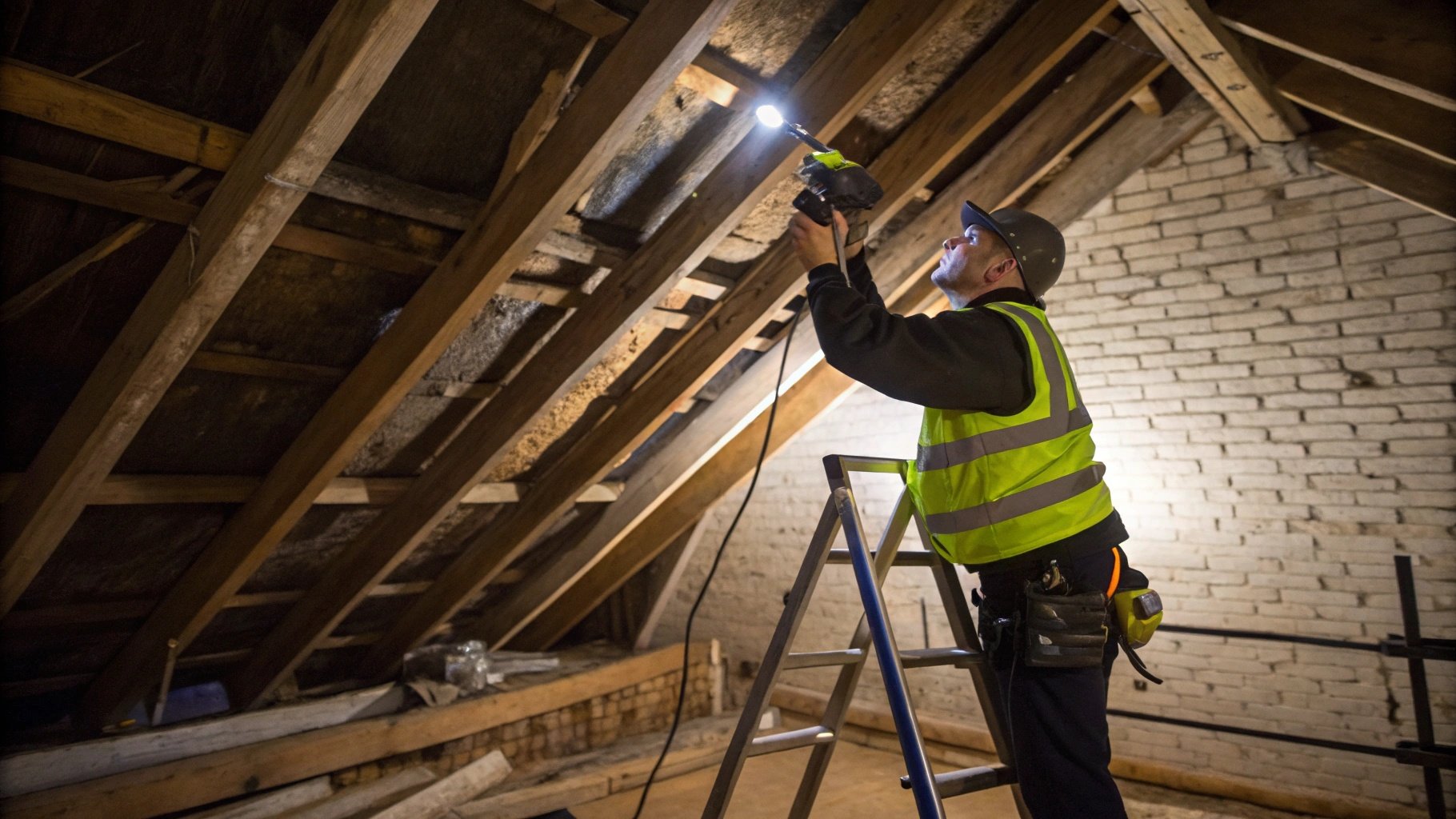
As an experienced residential surveyor with over 25 years inspecting properties across England and Wales, structural issues and subsidence are among the most serious defects I encounter during RICS home surveys. These problems can significantly affect property values, insurance, and saleability - yet many homebuyers struggle to understand what surveyors' reports mean and how concerned they should be.
This comprehensive guide explains everything you need to know about structural movement and subsidence, from understanding different types of cracking to realistic repair costs and insurance implications. Whether you're buying a property where the survey has identified structural concerns, or you're worried about existing issues in your current home, this expert advice will help you make informed decisions.
What is Subsidence?
Subsidence occurs when the ground beneath a property sinks or moves downward, causing the building's foundations to drop. This downward movement creates stresses in the structure, typically manifesting as cracking to walls, ceilings, and other building elements.
Key Characteristics of Subsidence
- Downward ground movement - Soil beneath foundations sinks or compresses
- Progressive damage - Cracking worsens over time if cause isn't addressed
- Differential settlement - Different parts of building sink at different rates
- Diagonal cracking - Typically wider at top than bottom
- External and internal damage - Affects both outer walls and internal partitions
Subsidence vs. Settlement vs. Heave
It's important to distinguish between different types of ground movement:
Settlement
- Definition: Normal compression of soil under building weight
- Timing: Occurs shortly after construction (first 5-10 years)
- Characteristics: Usually stops once soil has compressed
- Severity: Generally minor and non-progressive
- Action: Monitoring only, rarely requires intervention
Subsidence
- Definition: Abnormal downward movement of ground
- Timing: Can occur anytime, often linked to environmental changes
- Characteristics: Progressive worsening if cause not addressed
- Severity: Can be serious requiring underpinning
- Action: Investigation and remediation usually needed
Heave
- Definition: Upward movement of ground (opposite of subsidence)
- Timing: Often follows tree removal or prolonged wet weather
- Characteristics: Clay soil expands as moisture increases
- Severity: Can be as damaging as subsidence
- Action: Requires specialist investigation and treatment
Common Causes of Subsidence
1. Clay Soil Shrinkage (Most Common Cause)
Clay soils are particularly problematic because they shrink significantly when dried out and expand when wetted. Approximately 60% of subsidence claims relate to clay soil.
How it Happens:
- Drought conditions - Prolonged dry weather removes moisture from clay
- Tree roots - Extract moisture from soil beneath foundations
- Shrub roots - Large shrubs and hedges also remove soil moisture
- Leaking drains - Can wash away supporting soil under foundations
- Seasonal variation - Worse in summer, can partially recover in winter
High-Risk Areas in UK:
- London and Southeast England (extensive clay)
- Parts of Midlands and East Anglia
- Areas with London Clay, Gault Clay, Oxford Clay formations
2. Tree Root Activity (Accounts for 70% of Clay-Related Subsidence)
Trees are the single biggest cause of subsidence damage in the UK. Mature trees can extract 50,000+ litres of water annually from soil.
High-Risk Trees:
| Tree Species | Safe Distance from Property | Water Demand |
|---|---|---|
| Oak | 30+ metres | Very high |
| Poplar | 25+ metres | Very high |
| Willow | 25+ metres | Very high |
| Elm | 20+ metres | High |
| Ash | 20+ metres | High |
| Sycamore | 15+ metres | Moderate-High |
| Lime | 15+ metres | Moderate |
| Cherry | 10+ metres | Moderate |
Important: Tree removal can cause heave as soil re-hydrates and expands. Professional advice is essential before removing trees near properties with clay soil.
3. Leaking Drains and Water Mains
Underground leaks can wash away supporting soil beneath foundations:
- Cracked or broken drains - Water erodes soil under building
- Failed joints - Allows water escape and soil loss
- Corroded pipes - Old cast iron or clay pipes deteriorate
- Water main leaks - Can saturate ground causing soil collapse
Detection: CCTV drain surveys (£150-£400) can identify leaks before they cause serious damage.
4. Mining and Ground Conditions
Previous mining activity or natural cavities can cause subsidence:
- Coal mining - Collapsed old mine workings (particularly Midlands, Yorkshire, Wales, Northeast)
- Chalk or limestone cavities - Natural voids or old quarrying
- Brine extraction - Salt mining in Cheshire and surrounding areas
- Made ground - Buildings on poorly compacted fill material
Research required: Mining reports (£50-£150) available from Coal Authority for affected areas.
5. Poor Original Construction
- Inadequate foundations - Too shallow for ground conditions
- Incorrect foundation type - Strip footings on poor ground
- Building over filled ground - Without proper precautions
- Failure to remove vegetation - Before laying foundations
Identifying Structural Problems: What Surveyors Look For
During a RICS Level 2 or Level 3 building survey, chartered surveyors assess cracking and structural movement using specific criteria:
Crack Classification System
The Building Research Establishment (BRE) classifies cracks by severity:
Category 0: Hairline Cracks
- Width: Less than 0.1mm
- Severity: Negligible
- Action: None required
- Typical cause: Minor shrinkage, normal settlement
Category 1: Fine Cracks
- Width: Up to 1mm
- Severity: Very slight
- Action: Monitoring and normal decoration
- Typical cause: Thermal movement, minor settlement
Category 2: Slight Cracks
- Width: 1-5mm
- Severity: Slight
- Action: Investigation recommended, possible monitoring
- Repair: Filling and redecoration
- Typical cause: Settlement, seasonal movement, subsidence (early stage)
Category 3: Moderate Cracks
- Width: 5-15mm (roughly width of a £1 coin)
- Severity: Moderate
- Action: Structural engineer investigation required
- Repair: Repointing, possibly patch repair
- Typical cause: Active subsidence, structural movement
Category 4: Severe Cracks
- Width: 15-25mm (finger width)
- Severity: Severe
- Action: Urgent structural engineer investigation
- Repair: Major repair, possible underpinning
- Typical cause: Significant subsidence, structural failure
Category 5: Very Severe Damage
- Width: Over 25mm
- Severity: Very severe
- Action: Emergency structural investigation
- Repair: Major structural work, possibly partial rebuild
- Typical cause: Major structural failure
Crack Patterns: What They Mean
Diagonal Cracks (Classic Subsidence Pattern)
- Appearance: 45° diagonal line, typically wider at top
- Location: Often around windows, doors, at building corners
- Meaning: Different parts of building settling at different rates
- Concern level: High if progressive, moderate if historic
Stepped Cracking in Brickwork
- Appearance: Follows mortar joints in stepped pattern
- Location: External walls, particularly near corners
- Meaning: Foundation movement or settlement
- Concern level: Depends on width and progression
Vertical Cracks
- Appearance: Straight up-down cracks
- Location: Often at weak points (junctions, openings)
- Meaning: May indicate heave, thermal movement, or material shrinkage
- Concern level: Generally lower than diagonal cracks
Horizontal Cracks
- Appearance: Running horizontally along walls
- Location: Often at floor/ceiling junctions
- Meaning: May indicate wall tie failure, roof spread, or floor movement
- Concern level: Requires investigation to determine cause
Other Signs of Structural Movement
Experienced residential surveyors look beyond just cracking:
- Doors and windows sticking - Frames distorted by movement
- Gaps appearing - Between walls and ceilings, walls and floors
- Sloping floors - Indicating differential settlement
- Leaning or bulging walls - Outward movement of external walls
- Cracks reopening after repair - Indicates active movement
- Rippling wallpaper - Over cracks that are opening
- External signs - Cracks in paths, drives, or garden walls near house
What Happens After Structural Issues Are Identified
Surveyor's Recommendations
When I identify structural concerns during a building survey, my recommendations typically follow this hierarchy:
Minor Issues (Category 1-2 Cracks)
- Recommendation: Monitoring for 6-12 months
- Method: Tell-tales, crack gauges, or photographic record
- Cost: £150-£400 for crack monitoring equipment
- Action if stable: Simple repair and redecoration
- Action if progressive: Escalate to structural engineer
Moderate Issues (Category 2-3 Cracks)
- Recommendation: Structural engineer inspection
- Assessment: Professional evaluation of cause and severity
- Cost: £500-£1,500 for engineer's report
- May include: Site investigation, trial pits, soil testing
- Outcome: Recommendations for monitoring or remediation
Serious Issues (Category 3-5 Cracks)
- Recommendation: Urgent structural engineer investigation
- Assessment: Comprehensive structural survey
- Cost: £1,000-£3,000 for detailed investigation
- Likely includes: Soil investigation, trial pits, structural calculations
- Outcome: Detailed repair specification and costs
Structural Engineer Investigation
A structural engineer's investigation typically involves:
- Visual inspection - Detailed examination of all cracking and movement
- Monitoring regime - Installing precise measuring equipment (3-12 months)
- Trial pits - Excavating to expose and examine foundations
- Soil investigation - Testing soil type, bearing capacity, moisture content
- Tree survey - If trees present, assessing species, size, proximity
- Drain testing - CCTV survey to check for leaks
- Structural calculations - Engineering analysis of required repairs
- Detailed report - Findings, cause identification, repair specifications
Monitoring Structural Movement
Before expensive repairs, monitoring determines if movement is active or historic:
Monitoring Methods:
- Tell-tales (crack gauges) - Glass plates over cracks showing movement
- Precise crack measurement - Regular measurement with verniers
- Level monitoring - Checking for vertical movement
- Photographic records - Dated images for comparison
Monitoring Duration:
- Minimum period: 6-12 months to cover seasonal variation
- Ideal period: 12 months including full summer/winter cycle
- Clay soil properties: May require longer monitoring
- Cost: £200-£600 for monitoring equipment and periodic inspections
Subsidence Repair Methods and Costs
1. Underpinning (Most Common Serious Repair)
Underpinning involves extending foundations to deeper, more stable ground.
Types of Underpinning:
Traditional Mass Concrete Underpinning:
- Sequential excavation beneath existing foundations
- Filling voids with concrete in sections
- Typical cost: £1,500-£2,500 per linear metre
- Total cost: £10,000-£50,000+ depending on extent
Mini-Piled Underpinning:
- Steel mini-piles driven to stable ground
- Connected to existing foundations via reinforced concrete
- Typical cost: £2,000-£3,500 per linear metre
- Advantages: Less disruptive, suitable for restricted access
Resin Injection:
- Expanding resin injected beneath foundations
- Lifts and stabilizes subsided areas
- Typical cost: £100-£250 per injection point
- Total cost: £5,000-£20,000 depending on extent
- Advantages: Quick, minimal disruption
2. Tree Management
When trees cause subsidence, options include:
- Tree removal: £500-£2,000 depending on size (but may cause heave)
- Crown reduction: £300-£1,500 (reduces water demand)
- Root pruning: £400-£1,200 (targeted root removal)
- Root barriers: £2,000-£8,000 (prevent root encroachment)
Important: Tree Protection Orders (TPOs) and Conservation Areas may restrict tree work. Always check with local authority before proceeding.
3. Drainage Repairs
- Drain relining: £80-£150 per metre (no-dig repair)
- Drain replacement: £150-£250 per metre (excavation required)
- Soakaway repair: £1,500-£4,000
- Water main repair: £500-£2,000 (responsibility depends on location)
4. Cosmetic Repairs
After addressing the cause, cosmetic repairs restore appearance:
- Crack stitching: £50-£150 per metre (helical bars in mortar joints)
- Repointing: £40-£80 per m²
- Render repairs: £60-£120 per m²
- Internal plastering: £30-£60 per m²
- Redecoration: £500-£3,000 depending on extent
Total Typical Costs Summary
| Scenario | Typical Total Cost |
|---|---|
| Minor historic movement (monitoring + cosmetic repair) | £500-£2,000 |
| Tree-related subsidence (tree work + monitoring + repair) | £2,000-£8,000 |
| Drainage-related (drain repair + monitoring + cosmetic) | £3,000-£10,000 |
| Limited underpinning (single corner/wall section) | £10,000-£25,000 |
| Extensive underpinning (multiple walls/whole property) | £25,000-£75,000+ |
Insurance Implications
Making a Subsidence Claim
If you discover subsidence in your property:
- Contact your insurer immediately - Don't delay reporting
- Provide evidence - Photos, surveyor's report, monitoring data
- Insurer appoints engineer - Loss adjuster and structural engineer
- Investigation period - Typically 6-12 months monitoring
- Cause identification - Must establish cause of movement
- Repair authorization - If subsidence confirmed and active
- Work completion - Insurer covers repairs minus excess
Subsidence Insurance Coverage
What's typically covered:
- Structural engineer investigation costs
- Monitoring costs
- Underpinning or other structural repairs
- Cosmetic repairs and redecoration
- Alternative accommodation during works
What's NOT covered:
- Pre-existing damage known at policy inception
- Normal settlement in new builds (first 10 years typically excluded)
- Damage from lack of maintenance
- Tree roots from your own trees (in some policies)
- Deliberate removal of support (e.g., unapproved excavation)
Excess Amounts
Subsidence claims typically have high excesses:
- Standard excess: £1,000-£1,500
- High-risk properties: £2,500-£5,000+
- Some insurers: 10% of claim value (minimum £1,000)
Future Insurance After Subsidence
Properties with subsidence history face insurance challenges:
- Premium increases: 20-50% higher than average
- Higher excesses: £2,500-£5,000 for subsidence claims
- Specialist insurers: May need to use specialist providers
- Disclosure requirements: Must declare subsidence for typically 5-10 years
- Successful repairs: Premiums reduce over time if no further claims
Buying a Property with Structural Issues
Should You Walk Away?
Not necessarily. Consider these factors:
Proceed with Caution If:
- Movement is historic and stable - Monitoring confirms no progression
- Cause has been addressed - Tree removed, drains repaired, underpinning completed
- Proper guarantees exist - Insurance-backed warranties from repairs
- Price reflects issues - Substantial discount compensates for concerns
- Insurance is obtainable - Specialist insurer willing to cover
Walk Away If:
- Active progressive movement - Ongoing cracking and worsening damage
- Cause unknown or unresolved - No proper investigation or remediation
- No insurance available - Multiple insurers refuse cover
- Mining or ground issues - Ongoing risk that can't be mitigated
- You're not comfortable - Trust your instincts about the property
Negotiating Price Reductions
If proceeding with a property showing structural issues:
- Obtain quotations - Get structural engineer's repair costs
- Factor in disruption - Add 15-20% for inconvenience
- Consider future insurance - Negotiate for ongoing premium increases
- Account for resale difficulty - Future buyers may be deterred
- Request retention - Solicitor holds funds until repairs completed
Example negotiation:
- Asking price: £350,000
- Structural engineer's repair estimate: £18,000
- Add 20% contingency: £21,600
- Resale impact (5%): £17,500
- Higher insurance (£500/year × 10 years): £5,000
- Total adjustment: £44,100
- Negotiated price: £305,000-£315,000
Frequently Asked Questions
How do I know if cracking is serious or just cosmetic?
As a residential surveyor, I assess cracking based on width, pattern, location, and progression. Cracks under 1mm are typically cosmetic (Category 0-1). Cracks 1-5mm require monitoring (Category 2). Anything over 5mm needs structural engineer investigation (Category 3+). Diagonal cracks wider at the top, stepped cracking in brickwork, and cracks appearing both internally and externally are concerning patterns. However, crack width alone doesn't tell the whole story - a 3mm crack that appeared 20 years ago and hasn't changed is less worrying than a 2mm crack that's appeared in the last 6 months. This is why professional RICS building surveys are invaluable - we have the experience to distinguish between historic settlement and active movement.
Will underpinning affect my property value?
Underpinning's impact on value depends on several factors. Immediately after completion, underpinned properties typically sell for 10-25% less than equivalent non-underpinned properties. However, this discount reduces over time: after 5-10 years with no further issues, the discount may reduce to 5-10%. Properties with insurance-backed guarantees and complete documentation command better prices. Importantly, proper underpinning is preferable to unresolved subsidence - buyers would rather see professional repairs with guarantees than ongoing structural problems. The key is transparency: disclose the history, provide all documentation, and demonstrate the issue is resolved. Some buyers actually prefer underpinned properties because they have better foundations than similar properties.
Can I get a mortgage on a property with subsidence?
Mortgage availability depends on the subsidence status. Active, unresolved subsidence usually results in mortgage refusal - lenders won't risk lending on unstable properties. Historic subsidence that's been properly repaired with guarantees is generally mortgageable, though some lenders are more cautious than others. Lenders typically require: 1) Structural engineer's report confirming repairs, 2) Insurance-backed guarantees (minimum 10 years remaining), 3) Evidence of monitoring showing no movement, 4) Buildings insurance confirmed. Some lenders may require retention of funds until satisfied, or impose higher interest rates. Properties undergoing monitoring (movement not yet proven stable) often face mortgage difficulties - lenders prefer certainty. If buying a property with subsidence history, involve your mortgage broker early to confirm lending availability.
How long does the insurance claim process take?
Subsidence insurance claims are lengthy processes. Initial investigation and loss adjuster appointment: 2-4 weeks. Monitoring period to determine if movement is active: 6-12 months (insurers won't authorize expensive repairs without proving progressive movement). Structural engineer investigation and report: 4-8 weeks. Insurer authorization of repairs: 4-8 weeks. Repair works: 4-12 weeks depending on extent. Total timeline: typically 12-24 months from first reporting to completion. This lengthy process frustrates homeowners, but insurers must prove the issue is genuine subsidence requiring intervention rather than historic settlement. During monitoring, you continue living in the property (unless unsafe). Some insurers provide temporary repairs to prevent further damage while investigation proceeds. Patience is essential with subsidence claims.
What if my surveyor missed subsidence when I bought?
If your chartered surveyor negligently missed visible signs of subsidence, you may have a professional negligence claim against them. However, several factors affect this: 1) The defect must have been visible at the time of survey, 2) A competent surveyor following normal practice should have identified it, 3) You must claim within 6 years of the survey (limitation period), 4) The surveyor's professional indemnity insurance must still be valid. Important: surveyors aren't expected to identify hidden defects or predict future problems. If subsidence developed after your survey, this isn't negligence. If cracking was minor at survey time but has since worsened, the surveyor isn't liable for this progression. Obtain a retrospective assessment from another RICS surveyor comparing the current state with photographs from your survey to establish if negligence occurred. Consult a solicitor specializing in surveyors' negligence.
Should I remove trees near my property to prevent subsidence?
Removing trees can cause as many problems as it prevents. Tree removal on clay soil often causes heave (upward ground movement) as the soil re-hydrates and expands without tree roots extracting moisture. Heave can be as damaging as subsidence. Instead, consider: 1) Regular crown reduction (every 3-5 years) reduces water demand while keeping trees, 2) Root barriers between trees and foundations prevent encroachment, 3) Monitoring existing trees for health and size, 4) Not planting new high-water-demand trees near buildings, 5) Professional arboricultural advice before removal. If trees are causing active subsidence, removal may be necessary, but should be done with insurance company involvement (they cover resulting repairs). Always check for Tree Preservation Orders (TPOs) before any work - unauthorized tree work can result in £20,000 fines. Consult a qualified arboriculturist and structural engineer together.
Is subsidence covered by the NHBC warranty on new builds?
NHBC Buildmark warranties cover subsidence, but with important limitations. Years 1-2: Builder must address defects including subsidence (subject to certain exclusions). Years 3-10: NHBC covers major damage to the structure from subsidence exceeding typically £1,500 (after which you pay first £1,500). However, certain causes are excluded: ground conditions that should have been discovered during site investigation, mining subsidence (covered separately by Coal Authority), damage from trees planted after construction, normal settlement (expected in first few years). For new builds showing movement, report immediately to the builder. They must investigate and remedy if it's genuine subsidence rather than normal settlement. If the builder doesn't respond adequately, escalate to NHBC. Keep detailed photographic records and consider commissioning your own monitoring. New build structural issues are rare but not unknown - poor ground investigation or inadequate foundations occasionally occur.
Conclusion: Professional Assessment is Essential
Structural issues and subsidence are among the most serious defects affecting residential properties. While the terminology can be intimidating and the potential costs significant, many structural problems are manageable with proper professional advice and appropriate remediation.
Key takeaways from this guide:
- Not all cracks indicate serious problems - Many are cosmetic or historic
- Professional assessment is essential - RICS surveyors and structural engineers provide expert evaluation
- Monitoring often precedes expensive repairs - Proving movement is active before major work
- Many causes can be addressed - Tree management, drainage repairs often sufficient
- Underpinning is expensive but effective - £10,000-£75,000+ but provides long-term solution
- Insurance complexities require patience - Claims process takes 12-24 months typically
- Properties with history can still be bought - With proper due diligence and price adjustment
As an experienced residential surveyor, I strongly recommend commissioning a comprehensive RICS Level 2 or Level 3 building survey before purchasing any property. The investment of £400-£1,500 for a professional survey can identify structural issues before you commit to purchase, potentially saving you tens of thousands of pounds and years of stress.
Concerned About Structural Issues?
Our experienced RICS chartered surveyors provide comprehensive structural assessments as part of Level 2 and Level 3 building surveys. Get expert identification of cracking, movement, and defects with clear recommendations.
Request a Building Survey View Survey Services