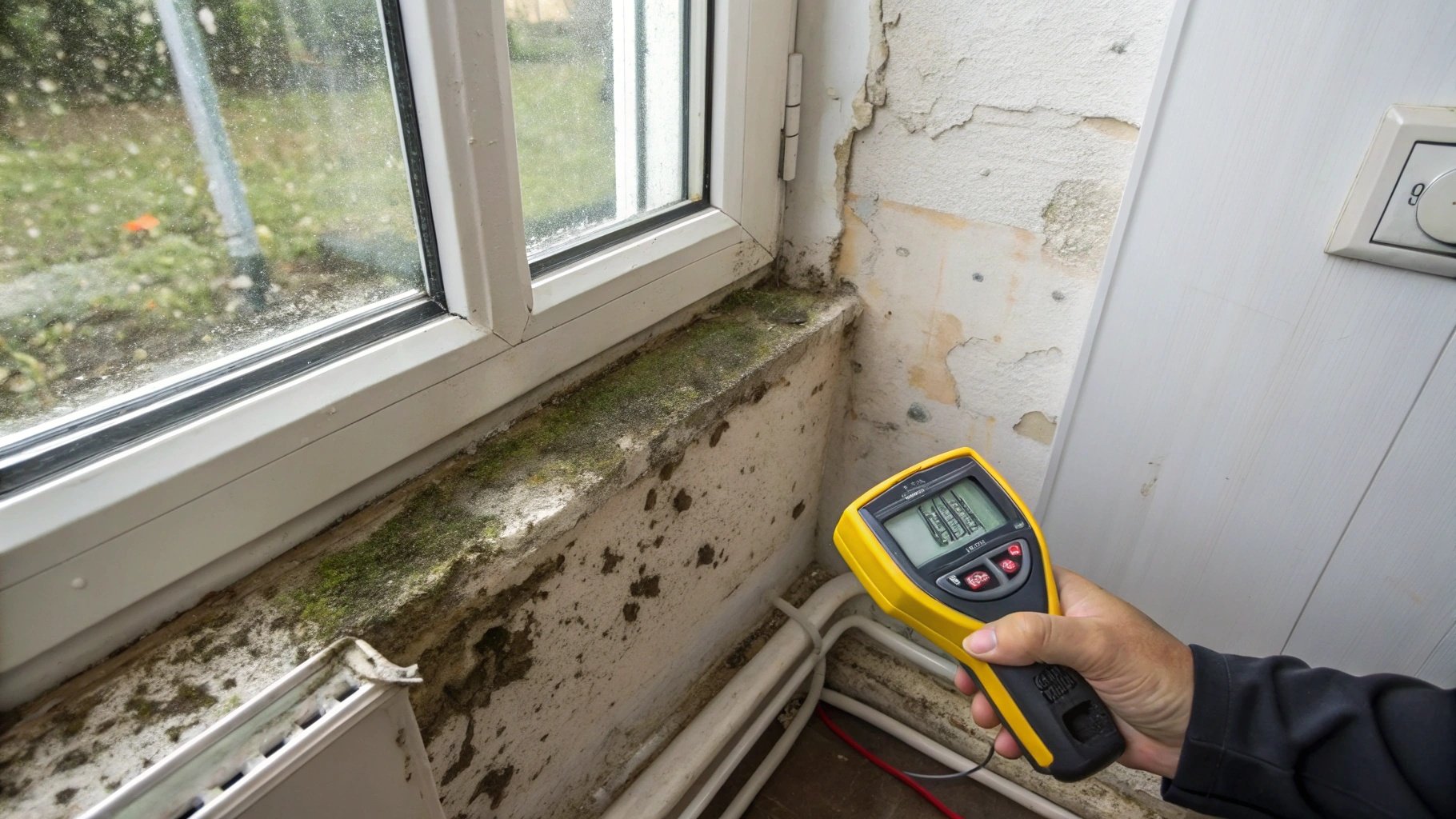
Damp is one of the most common and serious issues found during residential property surveys. As an experienced residential surveyor, I've inspected thousands of homes across England and Wales, and damp problems feature in approximately 40% of all RICS home survey reports. Understanding the different types of damp, their causes, and treatment options is essential for any homeowner or prospective buyer.
This comprehensive guide explains everything you need to know about damp in residential properties, from identification through to professional remediation. Whether you're buying an older period property or maintaining your current home, this expert advice will help you protect your investment.
What is Damp and Why Does it Matter?
Damp occurs when excessive moisture accumulates within the fabric of a building. Left untreated, damp can cause significant structural damage, reduce property value by 10-20%, create unhealthy living conditions, and cost thousands of pounds to remedy.
During a Level 2 home survey or Level 3 building survey, a qualified RICS surveyor will use specialist equipment including moisture meters, thermal imaging cameras, and hygrometers to detect and assess damp issues. Early identification through a professional property survey can save buyers from expensive surprises after purchase.
The Three Main Types of Damp in Properties
1. Rising Damp
Rising damp occurs when ground moisture travels upward through porous building materials via capillary action. This phenomenon typically affects the lower sections of walls, usually rising no more than one metre above ground level.
Causes of Rising Damp:
- Failed or absent damp-proof course (DPC) – older properties built before 1875 often have no DPC
- Bridged DPC – external ground levels raised above the DPC, or internal floors installed above it
- Damaged DPC – deterioration of slate, bitumen or chemical DPCs over time
- Porous building materials – brick, stone and mortar can absorb moisture from soil
- High water table – properties in low-lying areas near rivers or on clay soil
Signs of Rising Damp:
- Tide marks on internal walls, typically 30-100cm above skirting level
- Peeling or bubbling wallpaper and paint at lower wall sections
- Crumbling plaster with a damp, musty texture
- Salt deposits (efflorescence) appearing as white crystals on walls
- Rotting skirting boards and timber floors
- Musty odour in affected rooms
- Black mould growth in lower wall areas
Rising Damp Treatment Costs:
Professional remediation typically costs £1,500-£3,500 depending on the extent of damage and property size. Treatment involves:
- Installation of a new chemical or physical DPC (£40-£80 per linear metre)
- Removal and replacement of damaged plaster with sand/cement render
- Treatment of affected timber elements
- Redecoration after drying period (4-6 weeks minimum)
2. Penetrating Damp
Penetrating damp occurs when water enters a property through external walls, roofs, or other building elements due to defects or deterioration. Unlike rising damp, penetrating damp can appear at any height and often correlates with external defects.
Common Causes:
- Defective roofing – missing tiles, damaged flashing, failed lead valleys
- Faulty guttering and downpipes – blockages, leaks, or overflowing rainwater goods
- Porous or damaged brickwork – spalling bricks, eroded pointing, render cracks
- Cavity wall problems – bridged cavities from poor construction or retrofit insulation
- Window and door defects – failed seals, rotten frames, inadequate drip details
- Chimney stack issues – damaged flaunching, porous bricks, missing pots
- Plumbing leaks – damaged pipes within walls or under floors
Identification During Building Surveys:
An experienced chartered surveyor will use several techniques to identify penetrating damp:
- Moisture meter readings to measure water content in walls and ceilings
- Thermal imaging to detect cold spots indicating dampness
- Visual inspection of external building fabric for defects
- Internal examination correlating damp patches with external defects
- Assessment of cavity wall condition and insulation
Treatment and Costs:
Remediation costs vary significantly based on the cause:
- Roof repairs: £500-£5,000+ depending on extent
- Repointing brickwork: £40-£60 per square metre
- Gutter replacement: £400-£1,200 for typical property
- Render repairs: £50-£100 per square metre
- Window repairs/replacement: £300-£1,500 per window
3. Condensation Damp
Condensation is the most common form of damp in UK residential properties, caused by excess moisture in the air condensing on cold surfaces. While often less serious structurally than rising or penetrating damp, condensation can still cause significant problems if left unaddressed.
Why Condensation Occurs:
- Poor ventilation – inadequate air changes allow moisture build-up
- Cold surfaces – single-glazed windows, uninsulated walls, thermal bridges
- High humidity – cooking, bathing, drying clothes indoors
- Inadequate heating – cold property cannot hold moisture in air
- Occupant behavior – not using extractor fans, blocking vents
- Building defects – blocked airbricks, sealed chimneys without ventilation
Distinguishing Condensation from Other Damp:
- Appears on cold surfaces (windows, external walls, corners)
- Worse in winter months and poorly ventilated rooms
- Often accompanied by black mould growth
- Affects bathrooms, kitchens, and bedrooms most commonly
- Walls may feel cold and slightly damp to touch
- Low moisture meter readings compared to rising/penetrating damp
Solutions and Prevention:
Condensation can usually be resolved with relatively inexpensive measures:
- Improve ventilation: install extractor fans (£80-£200 each), open windows regularly, unblock airbricks
- Increase heating: maintain minimum temperature of 18-21°C, use trickle heating
- Improve insulation: loft insulation (£300-£600), cavity wall insulation (£500-£1,500)
- Double glazing: replace single-glazed windows (£400-£1,200 per window)
- Lifestyle changes: dry clothes outside, use lids when cooking, open windows after bathing
- Dehumidifiers: portable units (£100-£300) or whole-house systems (£800-£2,000)
How Residential Surveyors Detect Damp
During a RICS Level 2 or Level 3 survey, chartered surveyors use professional methods to identify and assess damp:
Moisture Meters
Electronic moisture meters measure the electrical resistance or capacitance of building materials. Readings above 20% indicate significant dampness requiring investigation. However, moisture meters can give false readings if:
- Salts are present in walls (from previous rising damp)
- Foil-backed wallpaper or vinyl coatings are installed
- Metal components are embedded in walls
Thermal Imaging
Infrared cameras detect temperature variations that indicate damp areas. Cold spots appear blue/purple on thermal images, while dry areas show as warmer colours. This non-invasive technique is particularly useful for:
- Identifying hidden leaks behind walls
- Detecting thermal bridges and insulation defects
- Mapping the extent of damp penetration
- Assessing cavity wall insulation performance
Visual Inspection
Experienced surveyors can often identify damp issues through careful visual assessment:
- Staining patterns and tide marks
- Plaster condition and surface texture
- Decorative damage (peeling paint, bubbling wallpaper)
- Mould growth patterns
- Salt deposits and efflorescence
- Correlation with external building defects
Hygrometers
These instruments measure relative humidity in the air. Readings consistently above 70% indicate high moisture levels that may lead to condensation issues.
Damp in Different Property Types
Victorian and Edwardian Properties
Period properties built 1850-1910 commonly experience:
- Rising damp – original slate or bitumen DPCs deteriorate over time
- Solid wall limitations – no cavity means increased penetrating damp risk
- Lime mortar erosion – softer than modern cement, requires regular repointing
- Suspended timber floors – require underfloor ventilation through airbricks
A Level 3 building survey is recommended for these properties to assess structural implications of damp damage.
1930s-1960s Properties
Properties from this era typically feature cavity walls but may suffer from:
- Cavity wall issues – bridged cavities from mortar droppings during construction
- Deteriorating wall ties – original metal ties can corrode, causing damp patches
- Cavity insulation problems – retrofit insulation can bridge cavities if poorly installed
- Flat roof defects – many post-war properties have flat-roofed extensions prone to leaks
Modern Properties (1980s onwards)
Newer homes generally have better damp-proofing but can still experience:
- Condensation issues – well-sealed buildings trap moisture without adequate ventilation
- Construction defects – inadequate DPC installation or bridged cavities
- Plumbing leaks – more complex pipe runs increase leak risk
- Cavity wall insulation condensation – moisture within cavity from installation issues
Health Implications of Damp and Mould
Damp and mould growth in residential properties pose significant health risks, particularly for vulnerable occupants:
Respiratory Problems
- Aggravation of asthma and other respiratory conditions
- Increased risk of respiratory infections
- Chronic cough and wheeze
- Allergic rhinitis (hay fever symptoms)
Allergic Reactions
- Skin rashes and irritation
- Eye irritation and watering
- Nasal congestion and sneezing
- Hypersensitivity pneumonitis (rare but serious)
At-Risk Groups
Certain groups are more vulnerable to damp-related health issues:
- Young children and babies
- Elderly residents
- People with existing respiratory conditions
- Individuals with weakened immune systems
- Those with skin allergies or eczema
Legal Obligations and Insurance
Sellers' Obligations
When selling a property, vendors must:
- Disclose known damp issues on the TA6 Property Information Form
- Provide details of any previous damp treatments and guarantees
- Not deliberately conceal damp through redecoration before viewings
Failure to disclose can result in legal action after completion for misrepresentation.
Landlords' Responsibilities
Under the Homes (Fitness for Human Habitation) Act 2018, landlords must:
- Ensure rental properties are free from serious damp and mould
- Repair building defects causing damp within reasonable timeframes
- Respond to tenant reports of damp problems
- Maintain adequate ventilation and heating systems
Insurance Considerations
Most buildings insurance policies:
- Cover: sudden and unexpected water damage (e.g., burst pipes, storm damage)
- Exclude: gradual deterioration, wear and tear, and lack of maintenance
- Require: properties to be kept in good repair with regular maintenance
- May refuse: cover if damp issues are pre-existing or undisclosed
Always inform insurers of any damp problems identified during your home survey.
Treatment Options and Costs
DIY Solutions
Minor condensation issues can sometimes be addressed without professional help:
- Mould removal: specialist fungicidal wash (£10-£20), bleach solution for hard surfaces
- Ventilation improvement: install trickle vents (£15-£30 each), ensure airbricks are clear
- Dehumidifiers: portable units (£100-£300) can reduce humidity levels
- Minor pointing repairs: repoint small areas with appropriate mortar (materials £30-£50)
Professional Treatment Costs
More serious damp problems require specialist contractors:
| Treatment Type | Cost Range | Typical Duration |
|---|---|---|
| Chemical DPC injection | £1,500-£3,500 | 1-3 days plus drying |
| Replastering (after damp treatment) | £40-£80 per m² | 2-5 days |
| Roof repairs (typical) | £500-£5,000 | 1-5 days |
| Repointing external walls | £40-£60 per m² | Varies by area |
| Gutter replacement | £400-£1,200 | 1-2 days |
| Cavity wall remediation | £800-£3,000 | 2-5 days |
| Whole-house ventilation system | £800-£2,500 | 1-2 days |
Choosing a Damp Treatment Company
When selecting a contractor, ensure they:
- Are members of trade associations (Property Care Association, Trustmark)
- Provide detailed written surveys and specifications
- Offer long-term guarantees (typically 20-30 years)
- Use qualified surveyors (not just salespeople) for diagnosis
- Provide insurance-backed guarantees where possible
- Give itemised quotations with transparent pricing
Prevention: Protecting Your Property from Damp
Regular Maintenance
Prevent damp problems through routine property maintenance:
- Annually: inspect roof, gutters, external walls for defects
- Every 3-5 years: repoint brickwork as needed, maintain render
- Every 10-15 years: redecorate external woodwork, check window seals
- Ongoing: keep airbricks clear, maintain ground levels below DPC
Ventilation Best Practices
- Use extractor fans when cooking or bathing
- Open windows regularly, even in winter (10-15 minutes daily)
- Keep internal doors open to allow air circulation
- Don't block permanent ventilation (airbricks, trickle vents)
- Dry clothes outside or use a vented tumble dryer
Heating Strategies
- Maintain minimum temperature of 18-21°C
- Use consistent low-level heating rather than intermittent high heating
- Heat all rooms, including those rarely used
- Ensure adequate insulation to reduce heat loss
Damp in Your Property Survey Report
When you commission a RICS home survey or building survey, damp findings will be reported in three condition ratings:
Condition Rating 1 (C1) – No Repair Currently Needed
Minor moisture readings or condensation with no significant damage. May include recommendations for improved ventilation or minor maintenance.
Condition Rating 2 (C2) – Defects Requiring Repair or Replacement
Moderate damp requiring attention, such as failed DPC, localised penetrating damp, or significant condensation with mould growth. The surveyor will recommend obtaining specialist quotations.
Condition Rating 3 (C3) – Urgent Defects Requiring Immediate Attention
Serious damp causing structural damage or health risks. May affect your mortgage application and will require urgent remediation.
Negotiating After a Survey Identifies Damp
If your property survey reveals damp issues, you have several options:
Request Price Reduction
Negotiate a reduction based on:
- Contractor quotations for remedial works
- Additional 10-20% contingency for unexpected issues
- Inconvenience and disruption costs
- Period required for property to dry out after treatment
Request Repairs Before Completion
Ask the seller to complete damp treatment before exchange. Ensure:
- Work is carried out by reputable, qualified contractors
- You receive copies of guarantees and warranties
- A re-inspection confirms satisfactory completion
- Adequate drying period is allowed before redecoration
Walk Away
If damp is severe or the seller refuses to negotiate, it may be sensible to withdraw. Extensive damp can indicate:
- Poor overall maintenance and hidden defects
- Potential structural damage requiring investigation
- Costs exceeding your budget or making the property uneconomical
- Future insurance or resale difficulties
Case Study: Period Property Damp Issues
Property: 1890s Victorian mid-terrace, South London
Survey Type: RICS Level 3 Building Survey
Client: First-time buyers, purchase price £485,000
Issues Identified:
- Rising damp affecting front reception and hallway (tide marks to 80cm)
- Penetrating damp to rear extension roof (failed felt covering)
- Condensation and mould growth in bathroom (no extractor fan)
- Bridged DPC from raised external paving at front
- Failed pointing to front elevation allowing water penetration
Estimated Costs:
- Chemical DPC injection and replastering: £2,800
- Rear extension roof renewal: £1,400
- Repointing to front elevation: £1,800
- Lower external ground levels and install drainage: £600
- Bathroom extractor fan and redecoration: £400
- Total estimated cost: £7,000
Outcome:
Following negotiation supported by the detailed survey report and contractor quotations, the buyers agreed to purchase at a reduced price of £477,500 (£7,500 reduction). Works were completed post-purchase over 8 weeks, with insurance-backed guarantees provided by a Property Care Association member.
Frequently Asked Questions
How long does it take for damp to dry out after treatment?
Drying times vary depending on the severity and type of damp. After installing a new DPC, walls typically require 4-6 weeks minimum before replastering. For penetrating damp, once the source is fixed, walls may take 1-3 months to dry completely, depending on wall thickness and the extent of saturation. Proper ventilation and heating accelerate the drying process. Professional contractors use moisture meters to confirm walls are sufficiently dry before redecoration commences.
Can I get a mortgage on a property with damp?
It depends on the severity and type of damp identified. Minor condensation issues (Condition Rating 1) usually don't affect mortgage approval. Moderate damp (CR2) may require you to obtain treatment quotations and set aside funds, but mortgages are typically still available. Severe damp (CR3) affecting structural integrity may result in mortgage refusal until remediated. Some lenders require retention of funds until work is completed. Speak to your mortgage advisor if your survey identifies damp issues.
Should I commission a specialist damp survey?
If your RICS surveyor identifies damp rated as Condition 2 or 3, they will typically recommend obtaining a specialist damp survey. However, be cautious - many companies offering "free" surveys are primarily salespeople incentivised to recommend expensive treatments. Instead, engage an independent specialist surveyor (look for CSRT or CSSW qualifications from the Property Care Association) who charges a fee for an impartial assessment. Expect to pay £200-£400 for a comprehensive specialist damp report that provides accurate diagnosis and treatment recommendations.
What's the difference between damp and condensation?
Damp (rising or penetrating) involves water entering the building fabric from outside - through the ground or walls. Condensation is caused by excess moisture in the air inside the property settling on cold surfaces. Key differences: damp produces higher moisture meter readings (typically 20%+), causes structural damage, and appears in consistent patterns related to external defects. Condensation produces lower readings, primarily affects surface finishes, appears on cold surfaces (windows, external walls), and is worse in winter. Condensation usually costs less to resolve (£200-£2,000) compared to damp treatments (£1,500-£5,000+).
How effective are chemical damp proof courses?
Chemical DPCs, when correctly installed by qualified contractors, are highly effective and come with 20-30 year guarantees. The process involves injecting silicone or water-based cream into drilled holes at regular intervals. However, success depends on: correct diagnosis (many cases attributed to "rising damp" are actually penetrating damp or condensation), proper installation by trained operatives, removal of contaminated plaster, and addressing the source of moisture (external ground levels, poor drainage). Physical DPCs (membranes) are more reliable but significantly more expensive and disruptive. Always use Property Care Association registered contractors who offer insurance-backed guarantees.
Does damp affect property value?
Yes, damp can significantly reduce property value. Minor condensation issues may have minimal impact (1-3%), but moderate to severe rising or penetrating damp can reduce value by 10-20% depending on severity, location, and remediation costs. Properties with untreated damp also sell more slowly and attract fewer buyers. Importantly, professional treatment with insurance-backed guarantees can restore value, particularly if properly documented. When selling, providing evidence of completed damp treatments and guarantees can actually reassure buyers and prevent future price negotiations. Our advice: address damp issues promptly to protect your property investment.
Can cavity wall insulation cause damp?
Poorly installed cavity wall insulation can cause damp, particularly in exposed locations or properties with existing defects. Problems occur when: insulation bridges the cavity gap, allowing moisture to travel from outer to inner walls; insulation is installed despite existing cavity debris or mortar droppings; properties have existing defects (cracked render, faulty pointing) allowing water penetration; or properties are in exposed locations subject to wind-driven rain. If damp appeared after insulation installation, contact the installer immediately (most work has guarantees). The insulation may need partial or complete removal. Always ensure cavity wall insulation is installed by registered installers (Cavity Insulation Guarantee Agency - CIGA) who provide 25-year guarantees.
Conclusion: Protecting Your Property Investment
Understanding damp issues is crucial for anyone buying or maintaining a residential property in the UK. As a residential surveyor with extensive experience conducting RICS home surveys across England and Wales, I cannot overstate the importance of early identification and proper treatment.
The key takeaways from this guide:
- Identify the type: Rising, penetrating, and condensation damp require different solutions
- Commission professional surveys: A Level 2 or Level 3 building survey by a qualified chartered surveyor is essential before purchase
- Act promptly: Damp worsens over time, causing structural damage and health issues
- Use qualified contractors: Ensure treatments come with insurance-backed guarantees
- Maintain your property: Regular maintenance prevents most damp problems
- Ventilate and heat adequately: Prevent condensation through proper ventilation and heating
If you're concerned about damp in a property you're buying or already own, don't hesitate to seek professional advice. The cost of a comprehensive property survey is minimal compared to the expense and disruption of dealing with advanced damp problems.
Need Expert Advice on Damp Issues?
Our qualified RICS residential surveyors provide comprehensive property surveys across England and Wales, with detailed assessment of damp and moisture problems using the latest diagnostic equipment.
Request a Survey Quote View Our Services